Let the organizer do the introducing.
Being new can feel more daunting than the work itself. Before a scheduled clean-up, read the organizer’s instructions and ask about the meeting point, toilets, terrain, access, and equipment. If you are bringing children, confirm the age policy and supervision requirements first.
Tell the organizer about any access needs or limitations. There may be useful roles away from an uneven bank, such as welcoming people or sorting supplies. You do not have to explain more than you are comfortable sharing.
Pack for the place and the weather.
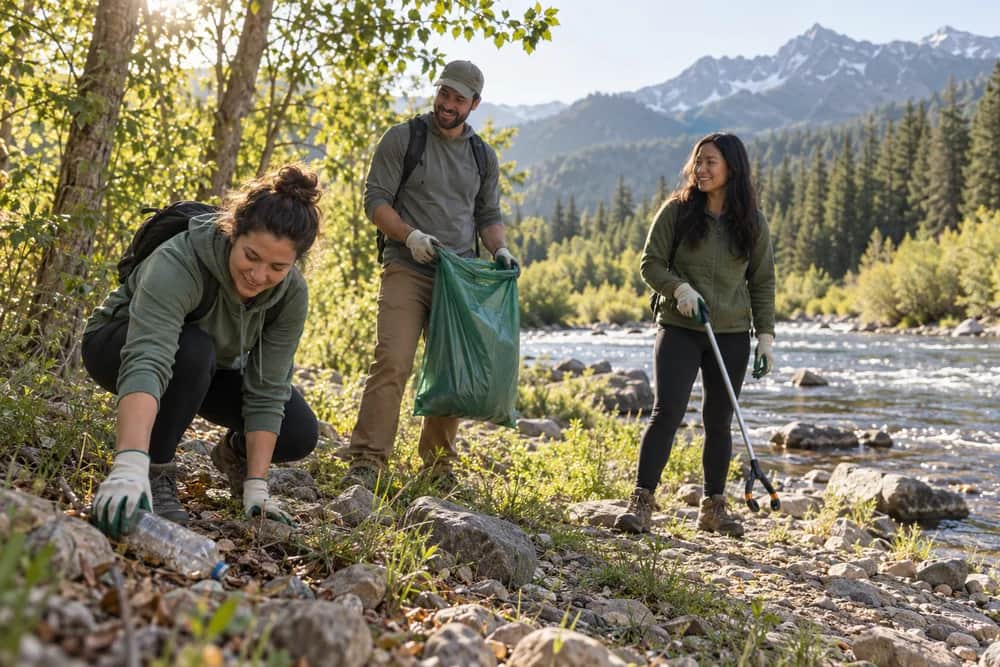
Wear sturdy closed shoes and clothing suited to the forecast. Bring drinking water, sun protection, and the protective gloves recommended by the organizer. Check whether bags and litter grabbers will be supplied before buying new equipment.
Keep your own belongings light. An extra layer and a charged phone can be more useful than an ambitious kit. If the forecast or river conditions change, check for an update before setting out.
Stay on the safe side of the bank.
Follow the briefing and stay within the agreed area. Do not enter the water, scramble down unstable banks, or reach into places you cannot see. Leave needles, chemical containers, and other hazardous objects untouched and alert the organizer.
Plants and wildlife have priority. Something that looks untidy may be shelter or nesting material. When you are unsure what to collect, ask. Finishing a bag is never more important than keeping people and habitats safe.
The last ten minutes count too.
Return equipment, follow the sorting instructions, and check that everything collected reaches the agreed disposal point. Wash your hands before eating. A tidy meeting area is part of leaving the place better than you found it.
Tell the organizer what helped and what was confusing. First-time volunteers notice things that regulars no longer see. Your feedback can make the next person’s first day easier.