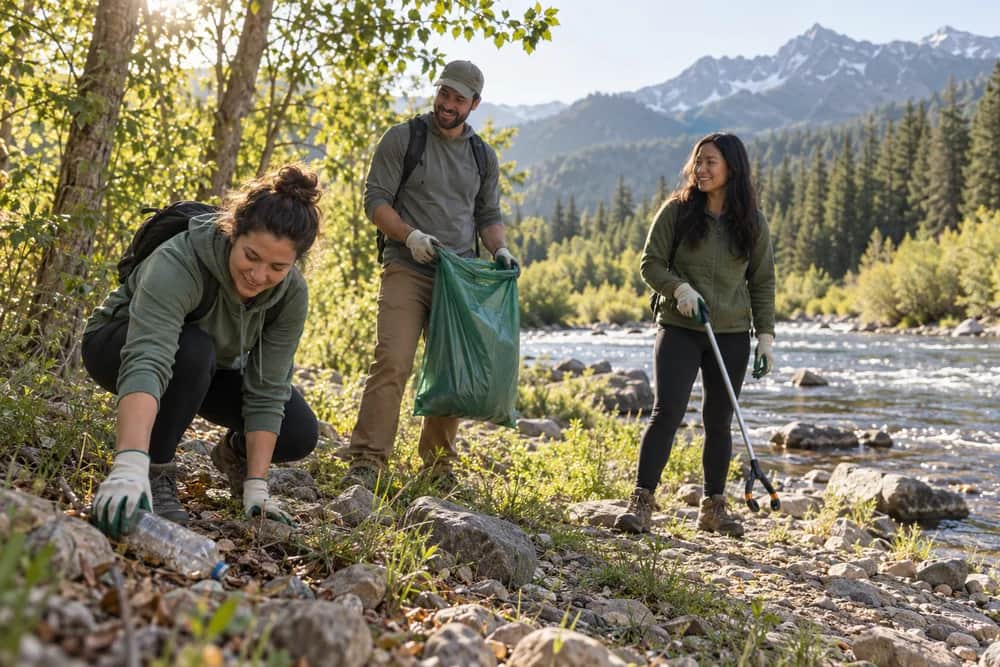
Choose a place and ask first.
A small, well-planned gathering can be more useful than an ambitious one. Start with the people who already know the place.
- Contact the land manager or an established local clean-up group for permission and guidance.
- Check safe public access, toilets, weather plans, and any seasonal habitat restrictions.
- Agree how waste will be collected, sorted, and removed before inviting anyone.
Make it easy to say yes.
A clear invitation answers the questions a first-time volunteer might feel awkward asking.
- Share the confirmed meeting point, start and finish time, and contact person.
- Describe the terrain, available facilities, and any access limitations honestly.
- State the age policy, supervision requirements, and what equipment is provided.
Brief the group before you begin.
Follow the land manager’s guidance and local safety requirements. Adapt or postpone if the conditions are unsuitable.
- Use suitable protective gloves, closed shoes, and collection tools.
- Keep people out of the water and away from unstable banks, wildlife, and restricted areas.
- Leave needles, chemicals, and suspicious items untouched; alert the organizer.
- Make the first-aid arrangements and emergency contact procedure clear.
Finish with the place in mind.
The event ends when the equipment is returned and the collected waste is dealt with, not when the last bag is filled.
- Follow the agreed disposal plan and leave the meeting area tidy.
- Wash hands before eating, and check that everyone has returned safely.
- Thank the group, invite feedback, and ask permission before sharing identifiable photographs.
- Record only what you actually measured. Do not equate litter collected with verified water-quality improvement.